Es mostren els missatges amb l'etiqueta de comentaris you say. Mostrar tots els missatges

dilluns, 1 de maig del 2017

THE GIRL ON THE TRAIN

Between the second and the third term I've read the book called The Girl on the Train, by Paula Hawkins, which was quite popular about two years ago. By then it caught my attention, because I felt it was the mystery type of books I like, and now that I've read it I can say that I was right.


The book is about a girl, Rachel, who is having problems with many aspects of her life, which lead her to start drinking too much alcohol, and this caused her even more problems. Everyday she catches a train that stops for some minutes in a stop which is near her old house, where she lived with her husband and where now he lives with her new wife and their baby. When the train is stopped, she sees a couple in their house and they seem like the perfect couple. One day she sees the girl of the couple, Megan, kissing another man, and the next day she sees on the news that she is missing. She remembers being around that neighbourhood that night, but as she was drunk, she can't remember what happened and what she saw. That's why, when they found the dead body of the girl, she starts to try to solve the case by remembering what happened that night. 


The book is very intriguing and makes you want to now what happened, specially at the beginning and at the end. At the beginning you want to know if the girl is dead and when you know she is, you start to wonder who has been the killer. Maybe in the middle of the book things start to get a little bit monotonous, because it's all the time Rachel trying to figure out what happened and getting drunk. But when you are getting close to the end, you are willing to know what happened and when she finally remembers what really happened, there are some really tense and thrilling scenes.


After reading the book, although I liked the ending, I thought of an alternative ending. It would be Rachel discovering she was the one who killed the girl. I thought it could be possible at the beginning, but then when I continued reading the book I didn't thought it would end like this. But actually it could be possible, because Rachel was drunk and didn't remember what she did, and she could have had a reason to kill her: jealousy. She saw the couple from the train and they seemed so happy, while she was depressed, coping with alcohol and alone after her husband had cheated on her with another woman, and formed a family with her. Also, when Megan disappeared and Rachel wanted to know what happened, she went to see Scott, Megan's husband and started to get close to him. So she could have been jealous of the perfect life Megan had with Scott, which lead her to try to steal Megan's life by killing her and approaching to Scott. Also, as the girl went missing the day after Rachel saw her kissing another man, she could have been very angry with her for cheating on her husband, because Rachel suffered that from her husband, and killed her. 

As I said, this is a possible alternative ending, but I liked real one and I liked the situations it lead to, because they were very tense and different from what you thought during the book. 

dissabte, 15 d’abril del 2017

BRITISH MUSEUM TASK

On the second day of our trip to London we visited the British Museum. We had some free time in there, to look for some things on a list and take photos of them, as well as visit other parts and elements of the museum, which has a beautiful and illuminated central hall.
In this post I'm going to show and explain a little bit what we had to find in the museum.


The first thing on the list was the Rosetta Stone, which was in the room 4. This stone was found in 1799 and it contains three versions of a Ptolomy V's decree. One is written in greek, the other one in the Demotic Egyptian language and the other one in hieroglyphs. As greek was a known language, this stone allowed the experts to decipher the Egyptian hieroglyphs, which was a big achievement. 


We also had to find the Egyptian Mummies, in the rooms 62 and 63. And well, as it is known, mummies were a way to preserve bodies, using chemicals and being preserved in dry spaces. The most famous and popular mummies are the Egyptians ones, which were normally pharaohs and were preserved inside the pyramids. 


The next thing we had to find were the Assyrian lion hunt reliefs, in the room 10. This reliefs represent scenes of the Assyrian villages hunting lions. They are so realistic for the time they were done, and they are considered an ancient treasure. It is believed that the objective of these reliefs was to show the power of the Assyrian king and its warriors on the animal world, which was chaotic, and their aim to bring civilization into it. 


In room 18 we had to find the Parthenon sculptures. Those sculptures were in the pediments of the Greek Parthenon and they are considered some of the best examples of Greek sculpture. They represent different moments in Athenea's life, such as her birth or her competition against Poseidon. These sculptures submit to the triangular frame of Parthenon's pediments, that's why the author had to create the figures in different positions that could fit into the pediments. 


The last concrete thing we had to fins was the Cyrus Cylinder, which is considered the first world's declaration of the human rights. It was found in Babylonia in 1879 and it seems to be from the 6th century. The written thing on it is in the name of the king Cyrus and there he denounced the king Nabondius, for his opression of the population of Babylonia. 


We also had to look for something that wasn't ancient. We found an exposition called "Cradle to Grave" and it displays the number of pills a man and a woman took during their lifetime. There are about 14,000 pills, which is the average a British person takes during their life. 


And finally, we had to to find the most surprising or curious object we could. In my case, I found very curious these dresses used during Carnival in ancient civilizations. It was curious and I thought the dresses were well done.


LONDON DIARY

Last week we spend four days in London, visiting the main attractions and spending some time enjoying ourselves in the city. One of the tasks we could choose was to do a video trip diary, explaining what we were doing everyday. This was not the task I chose, but I wanted to explain a little bit what we did there, so I'm going to explain it day by day in this post, with some photos I took to illustrate it. 

DAY 1

The first day started very early, to be accurate, we had to be in front of the high school at 2:20 a.m., so most of us barely slept that night. The bus left at 2:30 from the high school and we headed to the Barcelona airport, which was a journey of about two hours. Once in the airport, we went through all the controls and then we waited for the airplane. The flight was also about two hours long, and when we arrived to the British airport, we took a bus to get to our hostel, which was about one our and a half away. When we got to the Safestay Elephant and Castle hostel, we left our suitcases and we took the tube to go to the centre of London. We got off in Trafalgar Square and we walked a little bit around the city, until we got to Covent Garden. There, we had some free time to eat our lunches and to have a walk around the place. In the afternoon, we were taken on a guided tour around the city. Angus, our guide, showed us several palaces, such as the Buckingham Palace, while he explained different facts about the places we visited. The tour ended in the Big Ben and from there, we went to Picadilly Circus. We had a walk around there and then we went to the restaurant where we had dinner. After that, we went to the hostel and finally arrived to our rooms to rest. 


DAY 2


The second day was maybe one of my favourites. In the morning, we visited the British Museum, and there we did our task of finding some important objects. After that, we took the bus and went to Camden Town. There we had lunch in the food stands and had some hours of free time to have a look to the different shops and stands. I had a really good time in Camden Town, and I really liked getting lost inside all the stands, which where like a labyrinth. There we found the things were quite cheap (depending on what, of course), so we took advantadge to buy some souvenirs. In the afternoon, we took a little boat from Camden with which we were taken on a tour through the canals, which was very relaxing. When the tour finished, we went to Picadilly to get something fast to eat, and then we took the tube to meet with Álvaro, our Spanish guide who took us on a Jack the Ripper night tour. The tour was interesting, and we were able to see a different part of London that is not the typical one. After the tour, we went back to the hostel. 


DAY 3
The third thay started in the National Gallery. We spend part of the morning there, seeing the paintings, and in my case, I did there my task which costsisted of explaining a painting in there. Paula Caball and me chose the Arnolfini Portrait, and we explained there (even though we were interrumpted by the guard). When we got out the musem, we had our free time. My friends and I decided to go to Oxford Street, so we caught the bus to get there. We looked for a restaurant there to have lunch and after that we went shopping. When we were tired, we took the tube to get to the Natural History Museum, which was the meeting point. We got there earlier so we sat on the grass and relaxed a little bit. We made a quick visit to the museum and then we went to visit Harrods. We didn't spend a lot of time there, and then we went to a British pub to have dinner. Once we had had dinner, we went to Picadilly to see the lights and the atmposphere there, and then we went to the hostel. 


DAY 4
This was our last day in London. In the morning, we had a walk around London and we saw the Saint Paul's Cathedral, and visited and some of us went up The Monument, where we could see amazing views. We also crossed the Tower Bridge and we had lunch in the Borough Market. After it, we visited the Shakespeare Globe Theather. When we finished the visit, we went up the Tate building, were the views were also amazing. Then, we took the tube to go back to the hostel, we grabbed our suitcases and we went to the airport with the bus. We had dinner in the airport after we had went thorugh the controls, and then we took the plane. We arrived to Barcelona's airport and then we went back to Castelló, where we arrived at about 4:00 a.m. 


And that was the end of our trip to London. I enjoyed it a lot, I really liked the city, we visited interesting places and I had a great time with all the classmates.

dilluns, 6 de març del 2017

TO VOTE OR NOT TO VOTE?

To vote or not to vote? That is the question. When there have been elections, I've heard many times people saying things like: "Oh, I'm not going to vote, because I don't like any of the candidates." or "I won't vote because is going to win the same party as always.". And that's a wrong decision. Both statements are understandable, because it's true that maybe there is not any candidate or party with which you agree completely, and that even if you vote, it is possible that the party that usually wins, wins again. But, anyways, this shouldn't be a reason for not voting.

First of all, if everyone thinks the same as you, that their vote is not going to make a difference and, therefore, they don't vote, then they'll be right: there's not going to be a difference and the same party will win. But is not only one person who thinks like this, there are plenty of them, so, if they all voted instead of complaining and don't wanting to know about voting, they could actually make a difference, even if it's just a little one. And the party who wins is important, but it is also important the seats on the government and the partys that take them up. Thus, maybe by voting you won't get to change the president of your country, but maybe you can change a little bit the situation in the government for a better one. 

Secondly, is very difficult to find a party that you like 100%, because all of them have good and bad things, but this is not an excuse for not voting. I'm sure there is one party you like more than the other, and if it's not like this, I guess it is because you haven't taken your time to read and get information about any of them. Sometimes you won't vote one party because you truly like their electoral programme, but to avoid that party you don't like at all winning. But at least you voted, and you took part in the election of the party that is going to rule your country for some years.

In conclusion, if you care about politics in your country, which you ought to, you should always vote. In case you are happy with the situation, to maintain it, and in case you don't, to try to change it, instead of complaining and not doing anything on that subject, expecting that it will change on its own. 

dimarts, 21 de febrer del 2017

ONLINE SHOPPING

Internet is everytime offering more and more facilities, which can lead to a point in which we will be able to do anything through it.  Shopping is one of the activities that is becomind more popular to do online, but is it really an adavantadge or it has more cons than pros?

On the one hand, shopping on the Internet can be a good option in terms of convenience
because you don't need to leave your house and this can be useful for people who don't have much time or for who it it difficult to go and buy in the shops for any other reason. Also it broadens your possibilities, because it allows you tu buy things that are not sold close to where you live. This means you can get to products you would only be able to get to moving to the place it is sold, which can sometimes be so far away. 
Also, on the Internet you can sometimes find the products cheaper than they are in a regular shop, so you can save some money. Even though you may have to pay the shipping costs, in some cases it can still end up being cheaper, because you haven't had to pay for the transport to go to the shop, that sells the product at a higher price than online. 

On the other hand, however, shopping online can be a risky. In the first place, you can't be sure if the web page in which you are shopping can be trustable. It can be a good online shop and you can get your products perfectly the way you wanted, but there's also the possibility you pay and then you never get your purchase and you have no way to have your money back. In the second place, shopping online doesn't allow you to really see what you are buying. On the Internet there will be a photo, but it can be retouched or it can be a photo of a totally different product. And also, even though the photo is real, you can only see the product through a photo, you cannot see it and judge it in real life. This means that when you get the product it might not be what you were expecting as it can't turn out to be a different thing or maybe the quality is a lot worse than you expected.

Furthermore, buying on the Internet stops you from going to regular shops, which means that those business are losing money and this leads to the reduction of jobs and the clousure of the little shops that maybe have been opened for generations. 


In conclusion, I do agree in the convenience online shopping offers, as well as all the different possibilities and advantadges, but it is also important to keep in mind all the disadvantadges it has and its consequences. From my point of view, it's okay to buy some things on the Internet, but not everything. This way you keep buying things that are not necessary to be bought online in regular shops. On the Internet you can buy, for example, things that maybe only sell in a different country of far away from where you live, or things that can be trustable, for example books, that you can be sure it will be the same quality as if you buy it in a shop. But in other cases, I think it's better to buy them on a regular shop, so you can exactly see and be aware of what you are buying. 

dijous, 26 de gener del 2017

ARE SELFIES ART?

I have recently found an article which talks about an exhibition that is going to be held in the London's Saatchi Gallery and which will include selfies combined with other kind of portraits considered art, like Van Gogh's or Rembrandt's self-portraits.

I don't really know what people think about it, but I'm sure there is going to be people who will be against this exposition, saying that selfies are not art at all and can't be compared to works by artists like Van Gogh. But, from my point of view, it is an original idea.


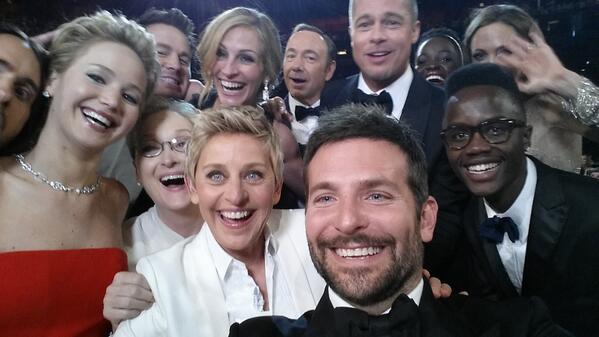
As it says in the news, nowadays it is very common to see people taking selfies, anywhere and anytime, so I think we can all agree in saying that selfies have become an all-time present phenomenon in our lifes. And also, whether we like it or not, there are some selfies that have become very influential or famous, so much that are almost like icons. For example, the famous selfie some actors took at the Oscar's ceremony in 2014, or some selfies taken by celebrities or influencers that have become viral. Also, I think selfies can also be a kind of art. I don't think the last Kim Kardashian's selfie can be considered art, but I do think that as photographs by photophers are considered a way of expression and even a source of beauty, selfies can also be extremely creative and became the same: a way to express feelings, points of view or just something beautiful. That's why I think it is not such a harebrained idea to feature selfies in an exhibition.


Maybe the controversy lies in combining them with classical self-portraits created by recognized artists. About this, I don't think it is a bad idea, as long as people don't mix the concepts up. The exhibition needs to be clear enough to make a difference between the two types of self-images and to highlight that those are two different ways and types, which can't be compared. But I think it is a good idea to combine selfies and portraits in a same exhibition, because it is a way to show the contrast between the world nowadays and how it was years and centuries ago. And it is a shocking contrast.


Saying this I don't mean that selfies need to be placed in the same level as self-portraits by artists, because I really think that portraits have a greater value and a lot of work behind, more than a regular selfie. What I want to say with this is that selfies shouldn't be undrvalued just because they are easy to take or because everyone can do it. Selfies can be as complex as portraits, and I think it would be great if we took this into account and bared it in our minds. And also, it would be fantastic if we all tried to be more creative with our selfies, because we could create even works of art. (maybe saying "works of art" is too much, but who knows what can selfies become).

dimecres, 9 de novembre del 2016

"REVÀLIDES"

About two weeks ago, many high school students were in strike to protest against the called “revàlides”, that the Government wanted to implant for next year. Those are exams, which have to be taken at the end of ESO and Batxillerat, and that students need to pass in order to carry on studying. The strike had an effect on the Government, and finally they withdrew from his position and declared that the “revàlides” would be modified and taken down as the concept they were at the beginning. At the end of ESO, it will be just a diagnosis exam, to know the student's level; and in Batxillerat, it will replace the current Selectivitat (PAU).

Even though they have been finally removed, I would like to give my opinion about the “revàlides”, just as if they were still going to take place.

First of all, I think it's unfair that you have risk it all in just one exam. If you pass the subjects of Batxillerat, in principle, it means that you have the level you need to have, so there's no point in making you take an exam that, if for any reason you fail, won't allow you to keep studying. We can all have bad day and do a bad exam, but it doesn't mean we don't have the level that is required. However, although doing a bad exam in Selectivitat can also be prejudicial for you, it doesn't force you to stop studying and to be out of chances.
And the same happens with ESO, if you have been passing all those years, and you have passed all the subjects, why shouldn't you be able to do batxillerat?

Approving the “revàlides”, means that there won't be Selectivitat anymore, so the way to get into university will be taking an exam directly in the university you want to study. In my opinion, that's not practical. When they finish Batxillerat, a lot of students don't have 100% clear what and where they want to study. A lot of them are guided by their results in Selectivitat. Depending on the mark they get, they will be able to get in a degree or not, so once they know the results, the choice becomes easier. And the same happens with the universities: a lot of students maybe have a vague idea of where they want to study, and
they normally permamently decide after knowing the results, and after knowing in which universities they can get in. So having to decide a degree and a university in order to go there to take the exam, it's a lot more difficult. Adding the fact that maybe you won't pass that exam, so you should probably take more exams at other universities, which is more work, while Selectivitat is only one exam for each subject and then, after the results, it's easier to choose. Although I don't totally agree with Selectivitat system, it is much practical and it's better than “revàlides” system.

After declaring that they would remove the “revàlides” they considered at first, the Government talked about some changes in Selectivitat exams. The main change, which makes PAU exams more silmilar to the idea they had of “revàlides”, is to make the same exam for all the country. Currently there is a different model of exam for each autonomous community, but they talked about removing that and making only one model for all the
Spanish students. I don't agree with that neither, because even though there are things that are important for all the students in the country to know, there are other things that are only important in specific communities. For example, in Catalonia, it's important the catalanism topic and it's necessary to dedicate time explaining it to the students. But this topic is not as important in Extremadura, for example, and teachers there can mention it and explain it briefly, but they obviously won't dedicate as much time as catalan teachers do. That's why I think it isn't a good idea to have only one model of exam for all the country.
But luckily, it seems that this change won't be carried out at the end.


Fortunately, at the end, the “revàlida” in ESO won't have any effect on the students' grades, and the one in Batxillerat will be practicly the same as Selectivitat (I find quite stupid and illogical to change it, if practically it will be the same, but well this how they do the things in this country), which I'm happy about, because I think “revàlides” were such a bad idea. 

NEW TECHNOLOGIES

If we look back to some years ago, we'll see that our dependence on technology has increased a lot. Back then, technology was something useful that could make your life easier, but you could live without it.
Now, this has changed. Nowadays we depend so much on technology that we feel so lost when something happens and we can't access to it. We are at a point in which we tend to use internet for everything, even if it's something we could solve without it. And not only to solve problems, also in our free time is usual to use the internet or any other technology before doing an activity that doesn't require it. For example, let's say you have free time and you can choose between reading a book and sufing on the internet, a lot of people would choose the internet, although they don't actually want to look up for something specific, they'll just spend the time there.

I don't thing using the internet that much is bad: it's a useful tool and it increases a lot the activities you can do. But I think we should try to not to depend so much on it, because if one day we can't access to it, there will be a collapse of everything and a huge breakdown.

An little example of this that I have seen in the last weeks, is that recently, in the high school

there is a new rule: we can't use the mobile phones inside the buildings. When they told us, there was people who complaint and that was disgusted by this new rule. In my case, I rarely bring my mobile phone at school, because I don't feel like I really need it, but I can understand that people who are used to bring their cell phone at school don't agree with this new rule. They don't agree because it bans something they normally do and that is normal and usual for them. But in some people, it allowes you to see the dependence on the phone that they have. When you are inside the high school, between the classes, you practically don't have time to look at your mobile phone, only during the break time, which you spend outside, so you are allowed to use your mobile phone. So I thing this rule is not a big deal, and we should all be capable of being at least three hours without needing to check our phones. 

In conclusion, from my point of view, the internet and technologies are such good and useful tools, and we have to take advantadge now that we have them, but we have to be aware of how much we use them, in order not to create a situation of dependence and to be able to carry on with our normal lives in case one day we can't have access to it anymore.  

diumenge, 9 d’octubre del 2016

CLIENT-FACING WORK

Client-facing work is complicated, both for the clients and for the way you have to act.
Sometimes there are clients that are just so annoying and disrespectful, as well as there are employees like this. And that's something that I hate.

On the one hand, if you work in a job in which you are facing the public, you should try to be polite and to treat your clients well, so they'll come again. I know that it can sometimes be difficult, because of some kind of clients that just make you lose your nerves. But I think that one of the main things if you work facing the public, is to have patience and to know how to put a smile on your face and still be kind even if you are exhausted or tired of the clients.
In my opinion, it's annoying when you go into a shop and the employee answers you in a rude way or just in a way that doesn't make you feel good. And another thing I find annoying is when the employee follows you to control that you don't steal anything. It's understandable, becaue employees are human and they can have a bad day; and it's also understandable that they want to aviod people stealing. But I think they should try to control that, because, for example, in my case, it makes me feel intimidated and uncomfortable, and it doesn't make me want to go again into that shop. Of course, everyone can have a bad day, but the problem comes when someone uses this excuse to be always rude.

On the other hand, as a client, I think we should all try to be understanding and to bear in mind that we can all make mistakes or have a bad day. If an employee makes a mistake, it's not necessary to go there and shout or complain in a bad way; you can just say, politely, to the employee that he has made a mistake. And also I think that is important to understand that, most of the times, employees are not the boss, and they are just doing what they are told to do. It means that maybe they don't agree in the way they have to do something, but they can't decide to do it in another way, so it has no point complaining about something they can't change.


After all, I think it is, as many other things, a matter of empathy, which I think it's not abundant in the nowadays society. We should all try to walk in other people's shoes, to see their difficulties and to act in a reasonable way. This way, we would be so much understanding with everyone, and we'll all feel better with each other, avoiding fights and arguments.

diumenge, 29 de maig del 2016

FEMINISM AND "FEMINAZISM"

I have wanted to talk about this topic for some time now, so I'm going to do it in this post. I'm going to talk about the difference between feminism and the coloquial called “feminazism”.
Let's start from the beginning, what is the feminism? The feminism is a social and political movement that fights against woman discrimination and supports gender equality, wanting men and women to have the same rights and duties and wanting their equality.

Nowadays, feminism is getting everytime more popular and it's gaining a lot of support, either from women or men.
The problem is that some people go further and defend another way of thinking under the name of feminism, although it is not the same at all. This is when the term “feminazism” comes in. These people, normally women, defend the rights of women and complain in case men have advantadges or better conditions, but don't complain when it's women who are having this advantadges.

In my case, I don't agree with them. I think men and women should be equal and have the same rights and duties, because we are all human beings and, of course I cannot say we are equal in everthing, because there are obvious different between the two genders, but this shouldn't be a reason to be treated differently. And, although I'm a woman, I find some situations in which women are being treated with advantadges in relation to men unfair.
But, even though I don't agree with the thoughts of the “feminazis” and in my opinion, if they are against male chauvinism, they shouldn't defend what they defend, I think everyone has the right to think and express their opinions and thoughts. What bothers me is that these people consider themselves feminists and state they are totally in favour of feminism, but they are actually acting in a lot of situations as the opposite of feminism is defending.

So I think they should accept that they are not feminists and don't make other people believe they are when they are defending other things. 

SELECTIVE XENOPHOBIA

One of our society's problem nowadays is the xenophobia. Not everyone, but there's a lot of people who feels rejection for immigrants, specially on situations like the one we are living right now, when we are not in a good economic moment and some people think that unemployment is caused by immigrants who “steal” the jobs to people from the country.

But we could say this xenophobia is selective, because normally people tend to reject immigrants from specific countries, a lot of times from African countries, who are normally in a worse economic situation. But then, when people come from other European countries, such as France, Germany or the UK, or even people from African countries, but who are rich, this xenophobia disapears and everyone is pleased with them. There is the typical example of the common rejection to the arab immigrants, but the acceptance and fondness to the arab sheikhs, because they are extremely rich and they bring money to the country.

Another example of this, that I saw on the Internet recently and that it made me think about writing this you say, is Donald Trump, one of the USA presidential candidates at the moment. Donald Trump is the representant of a republican party and is totally against immigration. He wants to close the borders of the country to avoid the entrance of immigrants, specially from hispano immigrants who come from the south of the country. But, despite his hate for immigrants, on the 5th May, when the “Cinco de Mayo” Mexican festivity is celebrated, he posted a photo eating a taco bowl and saying how much he loved this festivity and the hispanics. Or pictures of him with arab sheikhs can be also found, after he has said more than once that muslim people are a danger for the country.


Xenphobia is a problem that exists and that society needs to fix, but I think that total xenophobia is not something common, what is common is this “selective xenophobia”, that lots of times changes depending on the economic situation the person in front of you has.
This “selective xenophobia” is a problem, as well as the “total xenophobia”, but I think it is even worse, because it shows the incoherence and the illogicallity of a lot of people, who show that can't even follow their own principles. If you are against immigration, it's okay. I don't agree with you and I don't think you are right, but at least be coherent and be against all immigration and don't break your principles, even when the thing you don't accept is beneficial for you.

Also, I think it's a shame that someone famous, who totally shows this “selective xenophobia”, is having so much support on being the next USA president. 

dissabte, 28 de maig del 2016

"TREBALL DE RECERCA"

In this you say I wanted to talk about something I think it is quite unfair: the “Treball de Recerca” or Research Project only being done by students in Catalonia.
The Research Project is a project, which consists in a theorical and practical part, that students have to do between first and second of batxillerat and it is important for your Batxillerat final mark.

I don't think this project is a bad idea, because it makes you gain experience in working on this kind of projects, it prepares you for projects you'll have to do at university, and if you choose a topic you are interested in, you can learn a lot about it and it can be very interesting. But I find it very unfair that only the students in Catalonia have to do it. It may be a good project, but it takes also a lot of work and this extra amount of work it makes a big difference.

When you are in first of batxillerat you have to start thinking about your topic and maybe start working on it. Then, during the summer, when the school year is supposed to be over and you should have time to relax (or in case you have a summer job, relax a little less and work), you also have to work on your Research Project. Of couse you are not going to be working on it every day and every hour and it's not going to ruin your whole summer, but in my case, one of the things I like the most about summer is that, after a whole school year working, I can finally be three months without school responsabilities. And the Research Project takes me this away.
Finally, when you start second of batxillerat, your project probably won't be finished yet, so you will still have to work on it while you are starting the new school year, having exams and other school work to do. Because yes, it is an independent project, it doesn't belong to any subject, so you have to find some time to do it between the six hours you spend at class and the extra hours you spend at home doing homework or studying for the different subjects.

When you think about it like that, you see that it actually needs a lot of time and work, and I think it is unfair that while Catalan students are spending all that time and effort in doing the project, the rest of the students in Spain can spend that time doing other things. I don't really know how it works in the rest of Spain and maybe they have more work from other things that here in Catalonia we don't have, or maybe they have to do another kind of project, but I think this is just a little work compared to the Research Project here in Catalonia.

diumenge, 20 de març del 2016

TATTOOS

Nowadays it is more well-seen, but years ago there was a big controversy around the tattoos. People wearing big tattoos were often seen as problematic people and it was seen as something unsightly. This made some people not be able to get a job because they had visible tattoos or also piercings.
I personally like piercings and tattoos, as long as they aren't covering the whole body of the person. In my case I don't discard getting a tattoo or a piercing someday, but it will probably be a small one or a discreet one. I'm not really into the tattoo or piercing whole-covered bodies, for myself or for others, but I think it shouldn't be a problem for those who like it.
Having your body covered with tattoos shouldn't be an inconvenience for a person to get a job, because it doesn't define if he or she is hard working or not. It all goes to the common appearance problem. We all tend to judge the people by their appearance and I think it is kind of unavoidable, but in my opinion we should try to get over it and force ourselves to ignore our own prejudices.
People's looks (the style, tattoos, hairstyle, etc.) often reflect their personality, so we should say that it's something from the inside that goes outside gets shown to the world, but it's not all the inside that gets shown. It's just a little part and with that you can't determinate how a person is, their character or if he or she is a good or a bad person.
We should accept that people have different likes and different personalities and it doesn't affect their quality as a person. 

CHOOSING OUR FUTURE

In this you-say I wanted to talk about something that I have been asked a lot for a while: my future. Last year, when I was in 4th of ESO, we had to start deciding what do we wanted to do with our future. I didn't know it. I knew I wanted to study Batxillerat and to go to university, but I didn't know what I wanted to study. Now, that I'm doing 1st of Batxillerat I still don't know it. I don't have to choose what I want to do right now, but it stresses me knowing that the moment of choosing is getting everytime closer.
I think that my problem is that I don't like making important decisions. I feel pressed and I'm never sure of my choice. I'm afraid of, for example, choosing a topic for my Treball de Recerca that isn't interesting enough, that I don't know how to develop, or that after some weeks working on it, becomes boring for me. I'm afraid of choosing a degree that happens to be something I don't like, something I'm not good at or something that is going to be unuseful.
I try to tell to myself that making a mistake is not actually a big deal, because I can always fix it and learn from it, but I feel the presure anyways.
I think that we are tied to decide what we want to do with our lifes too early, and not everyone has an idea of what to go for. Actually, when we finish 4th of ESO we already have to start deciding: if you want to do Batxillerat, a Training Cycle, to work, etc. And then you have to decide which Batxillerat or Training Cycle you want to do. Focusing more on Batxillerat, because it is what I'm doing, I think that it is already a big choice choosing which
one you want to do. I know a lot of people that don't know what to study at university, and they like some degrees classify as science degrees and others as arts degrees, so it's a difficult choice for them to choose a Batxillerat. I don't really know if it would work, but maybe we should be able to choose the subjects we want regardless of if they are science or arts subjects, because then, at the end of batxillerat, it would be a little bit easier to choose a degree. Because someone who was doubting between a science and an arts one, for example, would have tried both type of subjects and maybe he or she would have a clearer mind than if he or she had only chosen scientific Batxillerat, for example.
I'm not actually a 100% sure it will work, because we also have to think about Selectivitat, the subjects that count more and all these things, but I think it would be a way to make the decision easier, at least for the people who have a lot of doubts. 

WHY ARE THE WARS STILL A THING?

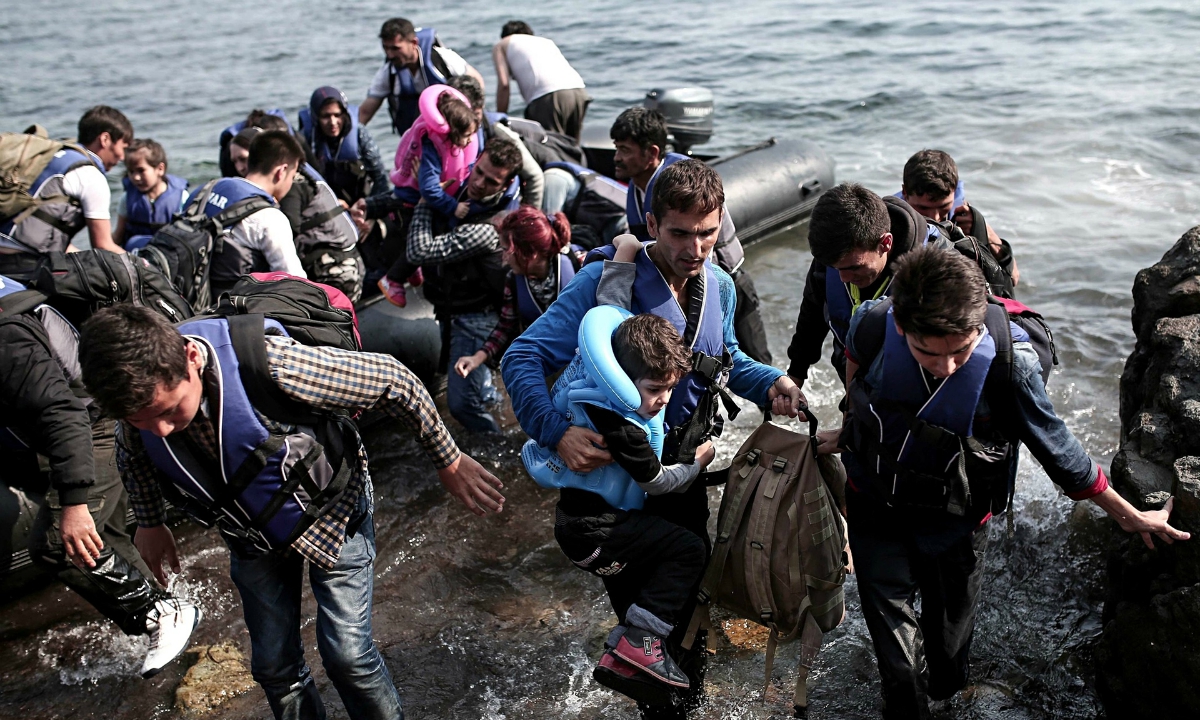
The current situation of the Syrian refugees is worldwide known, and it is a shame that it still continues the war in Syria.
There are always wars in the world, and I pretty sure that it will always be like this, but when I think about it I find it quite shocking. Thinking closely about the wars, they're kind of stupid. Maybe one of the countries or sides is proclaimed the winner, but actually all countries lose. They lose money, lives and also a little of humanity. But there are still being wars.
I'm not going to go into the topic of why there are wars, but of why the countries decide to participate in them. The countries fight for their interessts, economic, territorial or of any kind, but I find the fact that they participate on them shocking, taking into account that they have lived other wars, and they know what it is like. Of course, the for people who decides to start or join a war it's practically sure that they're not going to suffer from any damage, or at least not directly. But they should consider the consequences of a war for the population, consequences that they actually know because pretty much all the countries have lived a war before, and then decide if they join the war or not. The people ruling a country probably weren't in charge when the last war that affected the country took place, but they should know what were the consequences anyways. They forget the mistakes of the past, and they make them again.

In the Syria case, there are European countries involved, countries that suffered the devastating consequences of the World War I and II. In this case, their countries are practically not being affected by their own bombing in Syria, but here is where a matter of humanity lies. Those countries went through important wars and they know how hard is it, and it's not only that they are not helping the Syrians, is that they are attacking them. They are causing the death of thousands of innocent people, while the responsabile ones of all this are safe and comfortable in their houses.
And what I find even more outrageous is that when all the peope who are suffering the consequences of the war (remembering that these countries are participating in making the situation like this), try to go into these countries to escape from the situation in there, th states are closing the borders or they are seeing them as a problem. Yes, they're a problem for Europe, because it's a lot of people at once, but we should remember that part of this problem is caused by Europe.

It's a very complicated world and these problems are very difficult to solve, but I think we should start by analyzing the things, because as it happens in this case, we are creating our own problems, and then we don't know how to solve them. And these problems are not only affecting to us, they are also ending with thousands of lifes. 

dissabte, 19 de març del 2016

EMPATHY

Some days ago a video starring some supporters of the Dutch team PSV went viral. This video was shot in Madrid, and they were throwing coins to homeless women, laughing at them and treating them like animals and they also forced them to do push-ups in exchange of money. After seeing the video I was outraged. And I was also surprised because it's difficult to believe there is people like this. I can't even imagine how could this idea go through their minds, and much less how could they do it.
In big cities is common to see homeless people in the streets, asking for money for food, and it is heartbreaking. I can understand if someone doesn't feel like giving them money, because they maybe are not in a good economic situation, maybe they think that people is lying and they are going to spend the money in alcohol, or other reasons. But there is a big step from not giving them money to humiliating them. It's disgusting the way they treated them, knowing the women needed the money, so using the situation to spend a good time laughing at them.
I think this world has an important shortage of empathy. The people who did this didn't clearly think about the situation those women are living and probably (or that's what I hope) if they had put themselves in their position they wouldn't have done that. It's normal everyone taking care of themselves, doing what's the best for them, because at the end it's our life and we have to try to be as happy as possible. But it doesn't mean we don't have to help other people, even if we have to sacrificate something we like. And there is a lot of people who don't do this. I don't mean I am always helping people and sacrifing for them, of course, but I think there is a lot of people that only think what's the best for them and they just do it, without thinking if that's going to cause negative consequences to someone.
And in my opinion, the lack of empathy is one of the things that causes more problems in society, and that's why I think it's important to teach little children the importance of it, to try to make the new generations more empathetic.

THE VIDEO:


dijous, 25 de febrer del 2016

DOWNLOADING FILMS

Nowadays the cinema prices are quite high and his makes people stop going to the cinema, but it doesn't they stop watching films. They find a way to watch them and the most popular way of doing it is watching the films through the Internet (downloading them or watching them online).
But is this a bad thing? It depends on the point of view you're watching it from. If you watch
it from the film costumers' point of view it is a fantastic thing: you are able to watch the films you want without the need to leave your house and the best, free. But if you watch it from the film producers' point of view this is such a bad thing: they spend millions of dollars in producing the movie and then their work isn't paid enough.

I may be a little incoherent, because I think that, at the end, downloading films or watching them online is not something good, but I have to recognize that I do it.
I think we should pay for the films we watch, but I don't do it because then you feel stupid. If you spend your money on them but then everyone in your surrounding is still able to watch those movies without paying you feel you're being stupid because you are paying for something others are enjoying for free.
I think the solution would be to control the Internet a lot more and to remove the posibility of watching movies for free and make the people pay for them, but with lower prices. If watching a film in the cinema costs you about 7€, watching it at home should cost you a maximum un 2€. This would be fair for the film producers because even though 2€ is not a great gaining of money for them, they would definitely earn a lot more than they are doing now and they would be paid for their work.

This would cause annoyance to a lot of people for sure, including myself, because anyone would like going from being able to watch movies for free to having to pay for it, but I think that it is the best option. We should all walk in the film producers' shoes and think about them not being paid for everyone who enjoys their work, and probably we would all be a little bit more in favour of paying for the films.